Make your product AI-ready,
without a second auth stack
Your AI apps, agents, and MCP servers inherit everything you already built in Logto: sign-in, enterprise SSO, MFA, RBAC, and Organizations. Ship AI features enterprises can actually adopt, in an afternoon.
 Cursor
 ChatGPT
 Claude
 MCP
Connect AI agents and MCP servers to your product.

Enable Dynamic app
Dynamic app is CIMD (Client ID Metadata Document) under the hood, the client registration model the MCP spec recommends first. There is no parallel auth system to build and no spec to chase.
Register each client yourself
Prefer to vet every client yourself? Register them as third-party apps instead. Each registered app gets its own permissions and access rules. Dynamic apps all share one set.
AI agents and MCP servers call your API as the user.
Token exchange for downstream API calls
No token passthrough. Your MCP server or backend exchanges the agent's incoming token for a scoped access token meant for your internal API. The new token preserves the user's identity, never exceeds their permissions, and can be restricted to one organization.
Personal access tokens for headless agents and MCP servers
Some agents and MCP clients cannot open a browser. Users give them a personal access token instead. Your server exchanges that key with Logto for a short-lived access token. It can request only the scopes the task needs.
Users sign in inside AI.
 Sign in with Acme SSO (Entra ID)
Authentication flows built into chat
Embed sign-in and SSO directly into your chatbot flow. Users are prompted when needed, and sent right back to the chat once signed in.
Authentication flows built for the terminal
AI coding tools and agents ship as CLIs. Give them real sign-in: device code when there is no browser, authorization code with PKCE when there is.
Let agents call third-party APIs on behalf of users.
 Google Calendar
Connect your agent to third-party APIs
Enable your agent to act on behalf of users with third-party APIs like Google or GitHub. No manual token juggling, no storing secrets in plain text.
 GitHub
Encrypted token storage in Secret Vault
The user connects their external account once. Logto keeps the tokens encrypted in Secret Vault, refreshes them automatically, and hands them out only to requests made by that user.
Logto MCP Server runs on this exact stack.
Logto MCP Server
It is live in production today. That includes the hard part for B2B products: multi-tenancy. Every token an agent gets is scoped to one organization and to that user’s role in it.
Build the same for your product
Logto signs the user in and asks for consent. Your MCP server checks the token it gets. It asks Logto for a new token meant for your API. Each new token can be limited to one organization. Watch what it can do, then build the same for your product with the guides below.
Read more about auth for AI agents and MCP servers.
How to build yours
 Behind the scenesRemote MCP server in action: a new entry point for SaaS products in the AI eraLearn how to build a Remote MCP Server for your SaaS product. We share our experience with MCP vs Agent Skills, OAuth integration, and MCP tools design.
 Behind the scenesHow an MCP server calls your API on behalf of users: a production token strategyExplains the outbound token strategy for MCP servers: why token passthrough and M2M fail, and how token exchange keeps permissions aligned with users.
 TutorialMCP server auth implementation guide: using the latest specProvides key implementation points for MCP server authentication compliance with the 2025-06-18 specification.
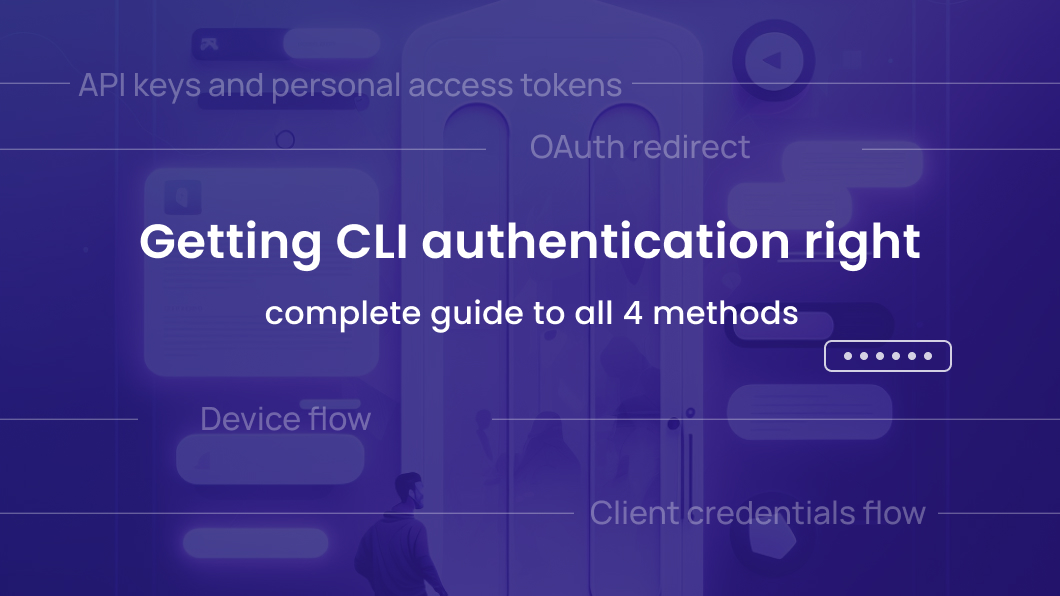 GuideGetting CLI authentication right: the complete guide to all 4 methodsThe 4 CLI auth methods that matter, how GitHub, AWS, and AI tools implement them, and the security mistakes you'll want to avoid.
Ship agent-ready auth this afternoon.
AI surfaces keep changing. Your identity layer does not have to: point the one you already trust at whatever comes next.