
One auth solution for B2B and B2C
Many products run consumer auth and B2B auth in separate stacks. Logto puts individual users and organizations in the same auth solution. Keep sign-in simple for consumers. Add organization context, SSO provisioning, branding, and roles for business customers.
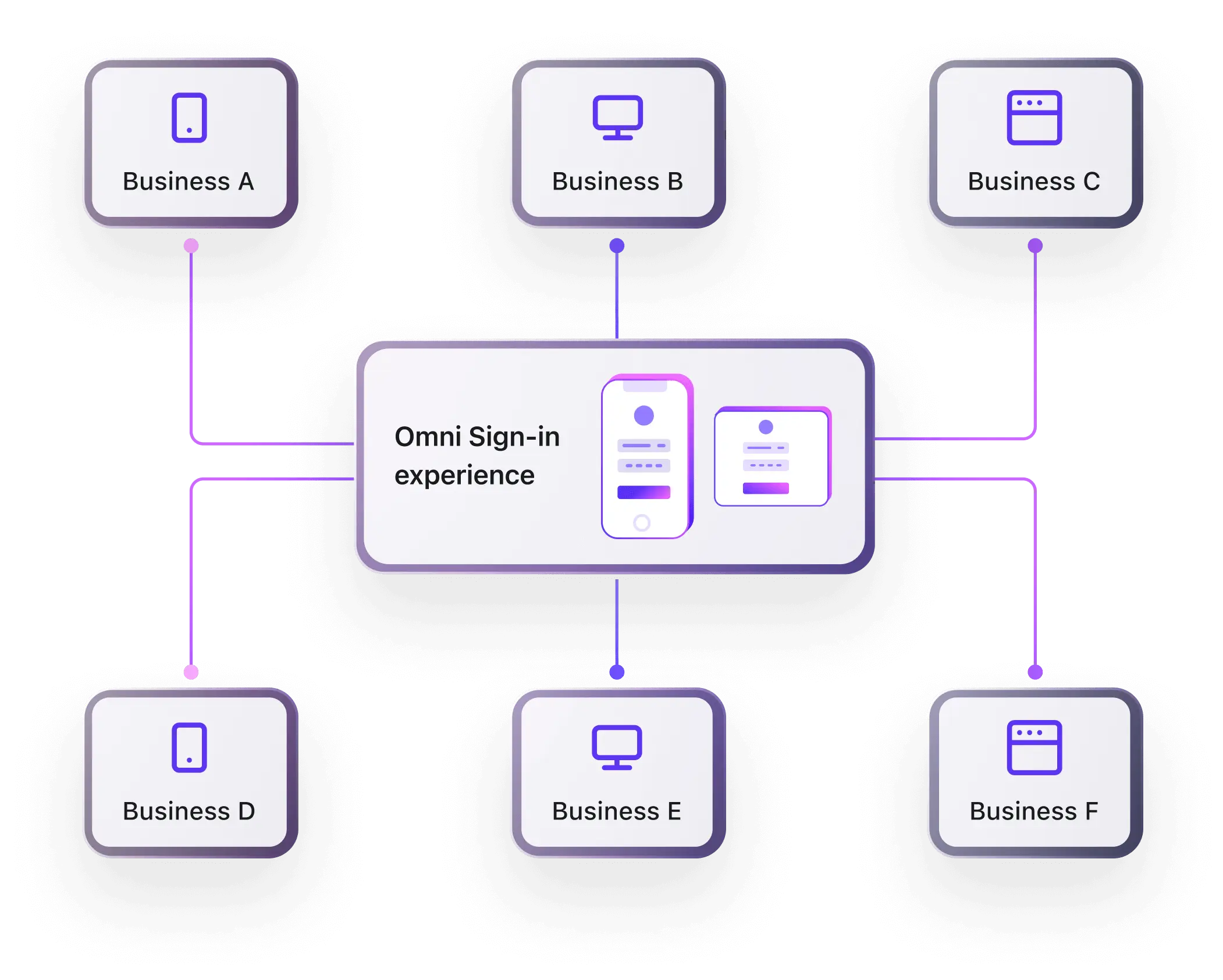
When B2B and B2C auth need to work together
B2C product adding B2B customers
B2B SaaS with individual end users
B2B2C platforms
Product suites with shared users
A unified auth model for users and organizations
Logto combines consumer sign-in and B2B organization access. One product can serve individuals, teams, and business customers.
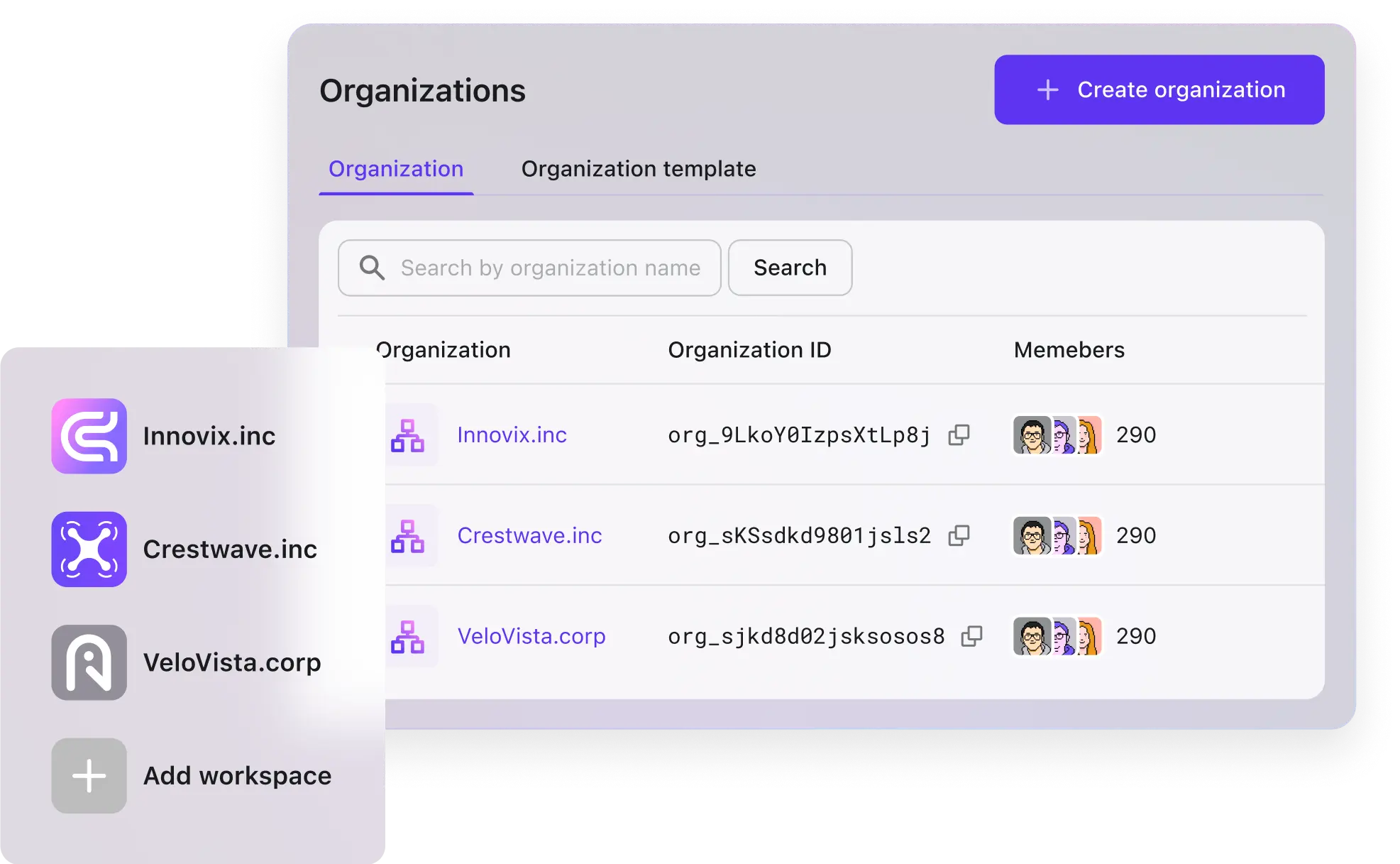
Organizations on top of one user pool
Keep one source of truth for users while grouping business customers with organizations. The same account can start as an individual user, join a business customer, and later belong to multiple organizations.
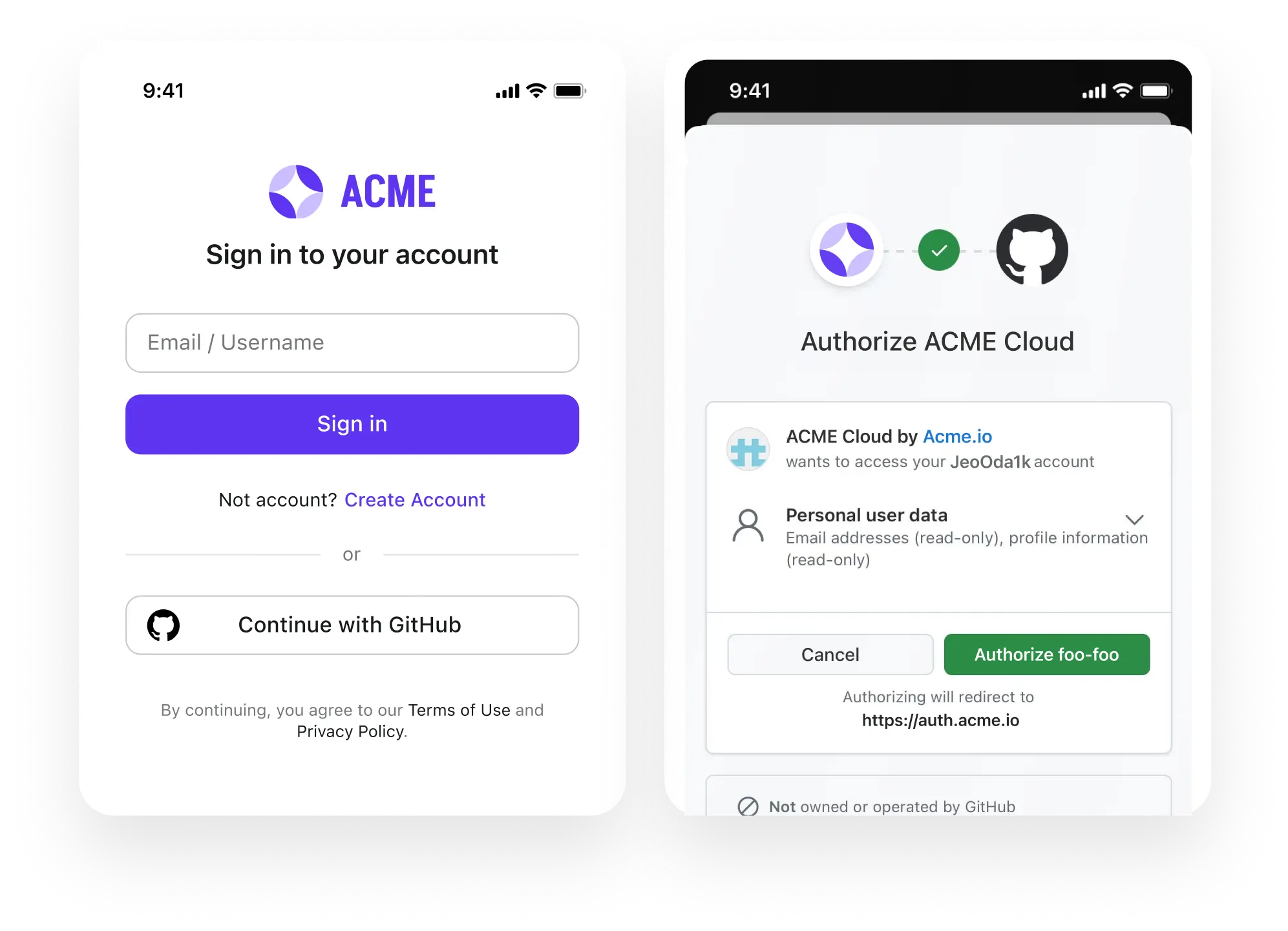
Consumer sign-in stays simple
Offer email, phone, social, and passwordless sign-in. Use one Omni sign-in experience across apps without duplicating user data or maintaining another auth stack.
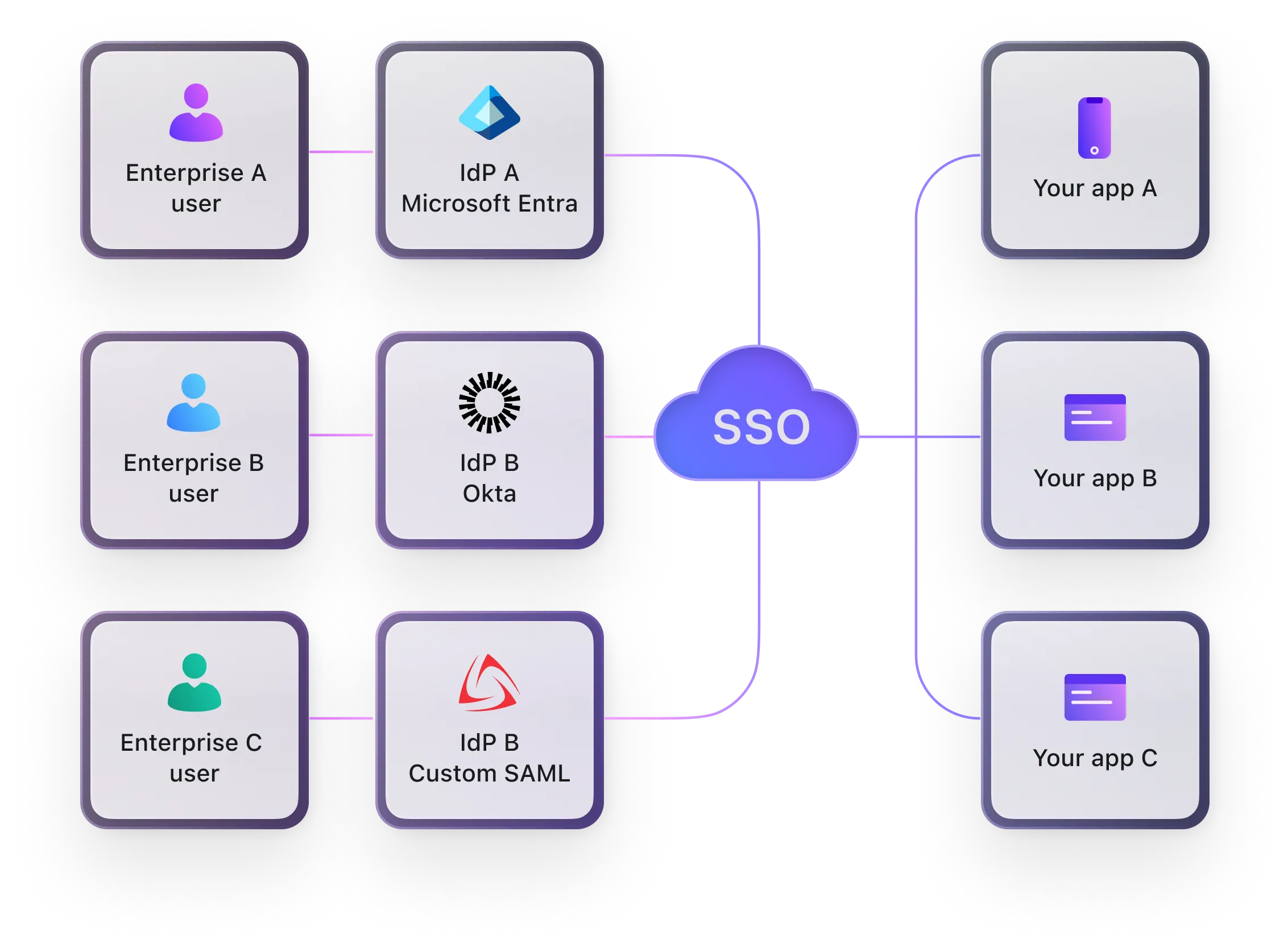
Just-in-time provisioning for organizations
With Enterprise SSO provisioning, new or existing users can join an organization on their first SSO sign-in. Email domain provisioning can also add users who sign up with verified email addresses or social sign-in with verified emails.
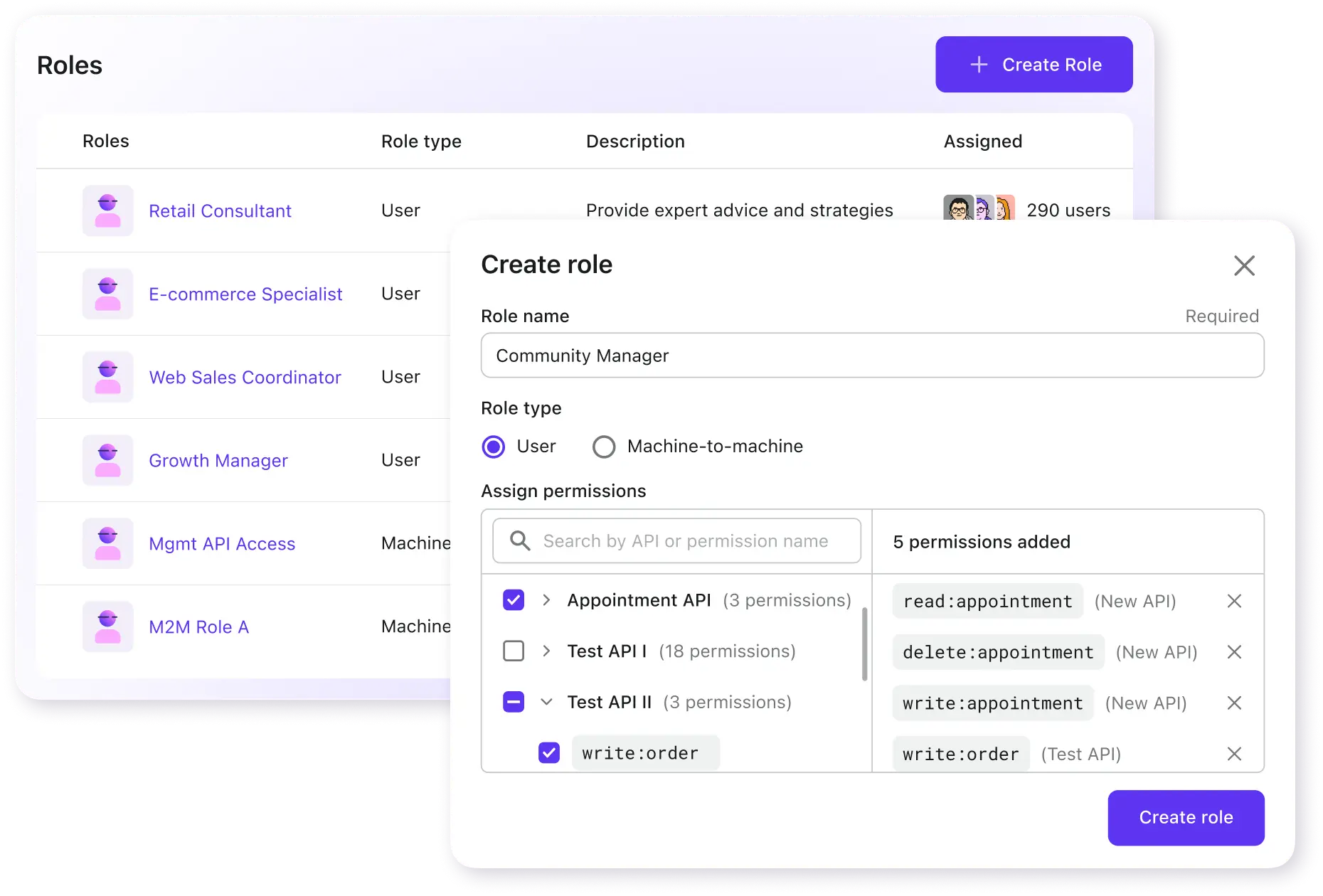
RBAC for product and organization access
Use API roles for product-level permissions and organization roles for customer-scoped access. Users can automatically join organizations and receive roles when they meet your provisioning requirements.
What B2B + B2C products need from auth
The hard part is not adding one more login option. It is serving consumer users and business customers without splitting auth into multiple systems.
Avoid separate auth stacks
Keep one user pool for both sides
Brand each organization when needed
Automate B2B onboarding with provisioning
Read more on B2B + B2C auth architecture
Learn what service provider-initiated (SP-initiated) single sign-on (SSO) is and how it can help your business-to-business (B2B) product. Learn how to efficiently build a multi-tenant SaaS application with robust authentication, organization management, and role-based access control in just a few hours. Tenant isolation is a key concept in multi-tenant applications. In this article, we'll discuss what it is and how it can be achieved. Learn about SP-initiated SSO for B2B apps
 Build a multi-tenant SaaS application
 Tenant isolation in multi-tenant application